
When Do Babies Start Making Eye Contact & Following Objects? A Doctor's Guide
Quick Summary: Eye Contact & Tracking Milestones
When Do Babies Start Making Eye Contact?
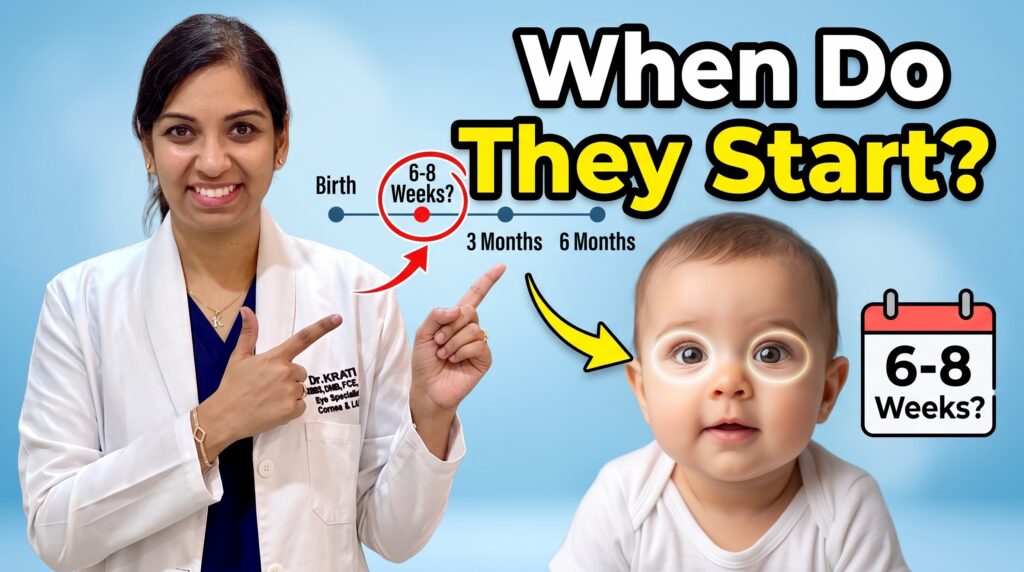
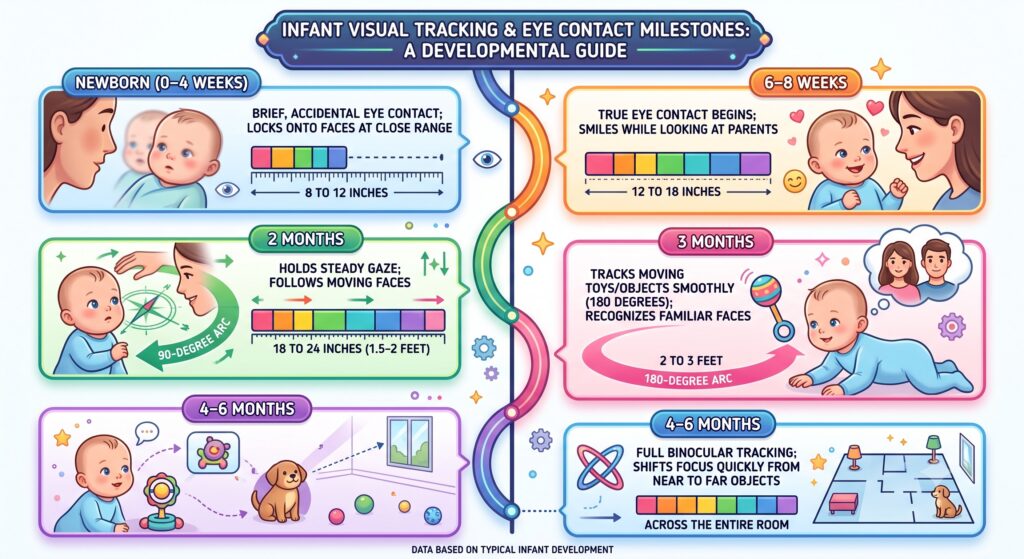
Most infants begin making brief, intentional eye contact between 6 and 8 weeks of age (1.5 to 2 months).
During the first 4 weeks, a newborn may stare intently at your hairline, eyes, or mouth, but these are short, unfocused glances. By 6 to 8 weeks, as their fovea (the central part of the retina) matures and eye muscles strengthen, babies begin locking eyes with caregivers and offering their first social smiles.
In Which Month Does a Baby Start Consistent Eye Contact?
Consistent, deliberate eye contact develops solidly during the second month of life (2 months old). At this stage, your baby uses eye contact to communicate, bond, and express interest in their surroundings.
When Do Newborns Start Following Objects with Their Eyes?
Visual tracking—the ability to follow a moving object or person with the eyes—develops in distinct stages:
1 Month: A baby may momentarily follow a large, high-contrast toy (like a black-and-white card) or a face moving slowly across their immediate line of sight, but their gaze quickly drops.
2 Months: The baby can follow an object horizontally across a 90-degree arc (from the side to the center of their chest).
3 Months: The baby masters 180-degree tracking, moving their eyes and head smoothly from left to right to follow a toy or person walking across the room.
4 Months and Beyond: Vertical and diagonal tracking develop, allowing babies to follow falling or bouncing objects.
How Far Can a Baby See at 2 Months?
At 2 months of age, a baby’s visual range expands to approximately 18 to 24 inches (1.5 to 2 feet).
What Does a 2-Month-Old See?
Faces & Expressions: They can clearly distinguish facial features and subtle expressions at arm’s length.
Color Perception: They begin distinguishing primary colors, particularly red, green, and orange, preferring bright, high-contrast patterns over muted pastels.
Movement: They notice movement across a broader room radius and will turn their head toward sounds or bright lights nearby.
Frequently Asked Questions (Parent FAQ)
It is common for infants to develop at slightly different rates. Ensure you engage with your baby at a close distance (8–12 inches) in a well-lit room. If your baby does not make eye contact or show interest in faces by 10 to 12 weeks of age, schedule an evaluation with a pediatric eye specialist.
In infants, breaking eye contact is completely normal and often a sign of sensory overstimulation. Young babies turn their heads away when their brain needs a brief pause to process visual information.
Occasional eye crossing or outward drifting is normal during the first 2 to 3 months as binocular vision forms. However, persistent eye misalignment after 3 to 4 months should be checked to rule out infant strabismus (squint).
Don’t Ignore Babies Eyesight
Early eye examinations can help detect eye problems and support healthier long-term vision for your child.