
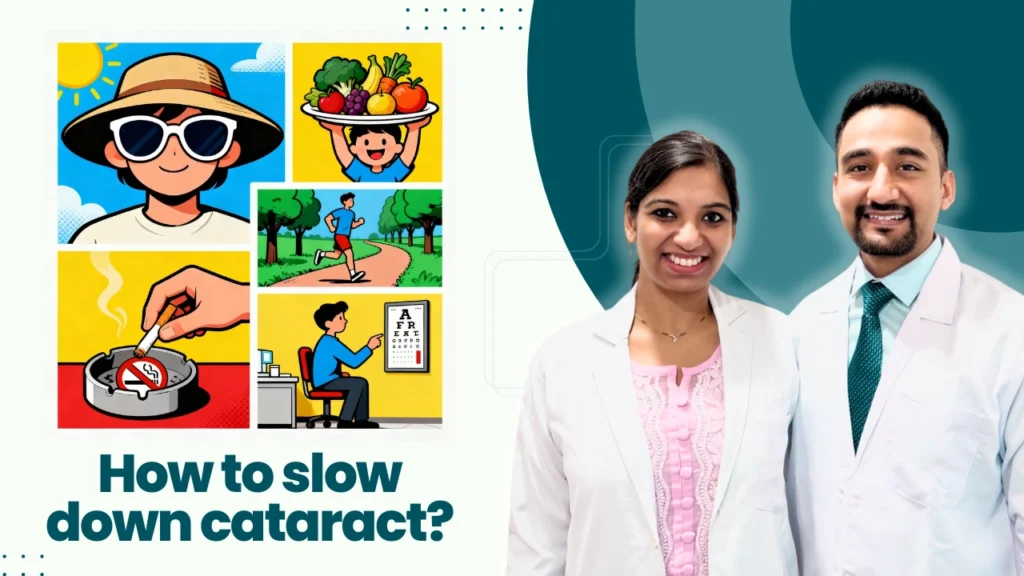
Cataract (clouding of the eye’s natural lens) is one of the most common causes of vision loss, especially in older adults. While many people think cataract is simply a matter of “when I turn old I’ll need surgery”, the good news is: there are many steps you can take to slow down or delay cataract progression. With timely eye-care, good lifestyle habits, and close monitoring, you can protect your vision longer. In this article we (Dr Saurabh Deshmukh & Dr Krati Gupta) explain in straightforward language how to stop or slow down cataract, answer common questions, and help you make sense of what you can do now.
What is cataract & why does it happen?
Your eye’s natural lens sits behind the iris and pupil. Its job is to focus light onto the retina so you see clearly. As we age (or due to other factors), the proteins in the lens may break down or clump together, causing clouding—this is called a cataract.
Though aging is the major cause, other risk factors include: excessive sun/UV exposure, smoking, heavy alcohol use, uncontrolled diabetes or high blood pressure, long-term use of certain medicines (like steroids), past eye injury or surgery, family history of cataract.
So while you cannot stop aging, you can control many of the modifiable risks.
Can you stop cataract entirely?
Realistically, for age-related cataract you cannot guarantee it will never start. However you can delay its onset, slow its progression, and improve outcomes when it does develop. Researchers note that limiting environmental exposures (sun, smoking, toxins) may slow cataract formation.
In other words: We aim not just to wait until surgery is needed, but to give you more years of clear vision and better quality when the time comes.
What are the key lifestyle & diet changes?
-
Protect your eyes from UV & bright sunlight – Wearing sunglasses that block 100% UVA/UVB rays and a wide-brimmed hat helps reduce the damage from ultraviolet light, which contributes to lens clouding.
-
Diet rich in antioxidants & key nutrients – Vitamins C, E, lutein, zeaxanthin, omega-3 fatty acids, whole grains all help. For example, you’ll find vitamin C in citrus fruits, vitamin E in nuts and seeds, lutein/zeaxanthin in leafy greens and egg yolks.
-
Avoid smoking and limit alcohol – Smoking increases oxidative stress and damages lens proteins. Heavy alcohol use also associated with higher cataract risk.
-
Control systemic conditions – Diabetes, hypertension, obesity and steroid medication use are linked to faster cataract development. Keeping these in check helps slow progression.
-
Adopt overall healthy habits – Regular exercise, maintaining healthy weight, reducing processed/sugary foods all support eye health.
How often should you have an eye check?
Even if you feel your vision is okay, once you cross age 40 (especially if there are risk factors) you should have a comprehensive eye exam. Early lens changes may not affect vision much but catchable by the eye doctor.
If you already have early cataract signs, exams may need to be more frequent—your ophthalmologist will advise.
When does surgery become necessary?
If cataract progresses to the point where your vision interferes with daily life (driving, reading, watching TV) or causes glare and colour fade, then surgery may be the right option. But the good news: if you’ve delayed progression, you likely reach surgery with better eye-health, which often leads to better outcomes.
What about diet supplements or miracle cures?
While research shows that certain nutrients are helpful, there’s no guaranteed supplement that stops cataracts. Diet and lifestyle remain the base. Some studies show more modest or mixed results for supplements alone.
Always discuss with your ophthalmologist before starting any special supplement.
Practical tips you can start today
-
Choose sunglasses labelled UV-400 or “100% UVA/UVB”.
-
When outside midday (10 AM–4 PM), use shade, hat or umbrella.
-
Fill half your plate with colourful veggies & fruits; include nuts and fish twice a week.
-
If you smoke—ask for help to quit; limit alcohol to moderate levels.
-
Check your blood sugar, blood pressure, weight yearly.
-
Schedule your eye exam — don’t wait for symptoms.
-
If you already have a cataract and are being monitored, avoid skipping follow-ups.
Why choose us
In Bhopal our team offers comprehensive eye-care for cataract, cornea, retina and ocular surface disease:
-
Dr Saurabh Deshmukh: Cataract & Retina Surgeon; Uveitis, ROP & Neuro-ophthalmology specialist.
-
Dr Krati Gupta: Cornea, Cataract & LASIK Surgeon; Dry eye & Ocular Surface Disease specialist.
We cover everything from prevention to surgery and post-operative care—so you get long-term vision protection.
📞 7002310270 | 🌐 www.eyedoctorbhopal.in
Summary
Cataracts may be common, but losing clear vision doesn’t have to be inevitable. By adopting protective habits, managing your health, and seeing us regularly, you can slow down or delay cataracts—and preserve your eyesight for longer. If you’d like a check-up or have questions, we’re here for you.