
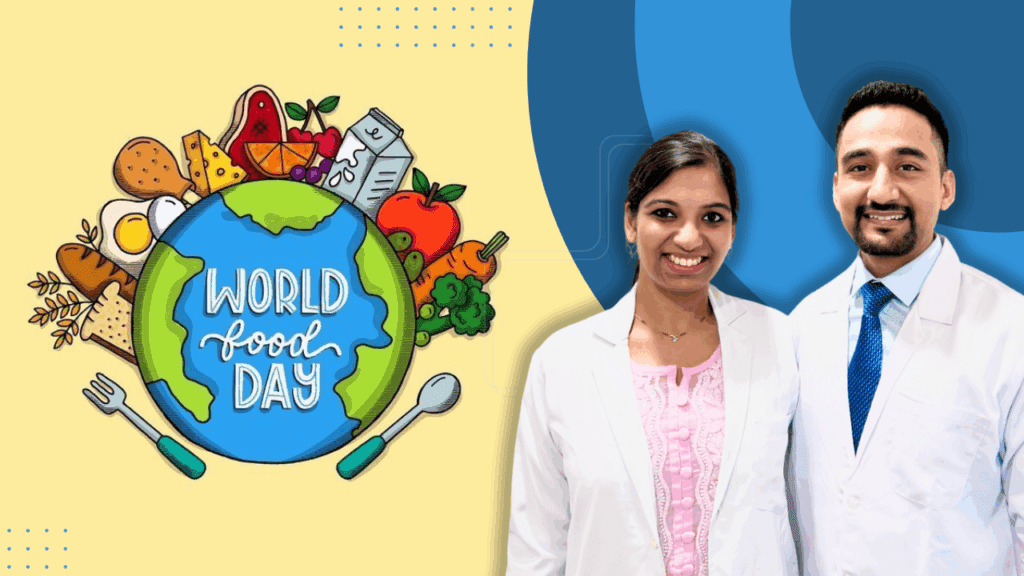
When we talk about food, most of us think of heart health or weight control — but did you know that what you eat directly affects how well you see?
On this World Food Day (October 16), let’s talk about something that’s often overlooked — how nutrition shapes your vision and helps prevent eye diseases.
Both Dr. Saurabh Deshmukh, Cataract & Retina Surgeon and Dr. Krati Gupta, Cornea, Cataract & LASIK Surgeon, believe that good vision begins with good nutrition. The eyes, just like every other organ in the body, rely on the right balance of vitamins, minerals, and antioxidants to stay healthy.
1. Why Food Matters for Eye Health
The retina, cornea, and lens are highly active tissues. They are constantly exposed to light and oxygen, which makes them prone to oxidative damage.
Antioxidants from food — especially vitamins A, C, and E — protect the delicate structures of the eye from damage. Omega-3 fatty acids keep the tear film stable, preventing dry eyes, and zinc supports the retina’s health.
Poor diet, on the other hand, can contribute to problems like:
Cataract – Clouding of the natural lens
Age-related macular degeneration (AMD) – Damage to the retina’s central part
Diabetic retinopathy – Retinal damage caused by uncontrolled diabetes
Dry eye syndrome – Caused by lack of healthy fats and hydration
2. Foods That Help Prevent Cataract
Cataract is one of the leading causes of visual impairment in India, especially among older adults. According to Dr. Saurabh Deshmukh, one way to delay cataract formation is through diet.
Here are some foods that help:
Citrus fruits (oranges, lemons, amla): Rich in Vitamin C, which slows down lens oxidation.
Leafy greens (spinach, methi): Contain lutein and zeaxanthin — natural antioxidants that protect the lens.
Almonds and sunflower seeds: Provide Vitamin E to protect eye cells.
Whole grains and beans: Contain zinc and selenium for lens health.
A plate full of colorful fruits and vegetables can do more for your eyes than you might imagine.
3. The Retina Needs Special Care
The retina converts light into signals that the brain interprets as vision. Diseases like diabetic retinopathy, retinal vein occlusion, and age-related macular degeneration can affect this process.
Dr. Saurabh Deshmukh, a leading Retina Specialist in Bhopal, emphasizes that:
“For people with diabetes, diet plays a huge role in protecting the retina. Controlling blood sugar through balanced meals can prevent vision-threatening damage.”
Foods for a healthy retina:
Fish: Omega-3 fats reduce retinal inflammation.
Carrot, Mango and pumpkin: Provide beta-carotene for retinal pigment regeneration.
Egg yolk: Contain lutein and zeaxanthin for macular protection.
Blueberries and pomegranate: Packed with antioxidants that protect retinal cells.
4. How Diet Helps Prevent Diabetic Eye Diseases
Diabetic retinopathy is becoming more common as diabetes rises across India.
The key to prevention is controlling blood sugar through diet and lifestyle.
Avoid sugary drinks, refined carbohydrates, and fried foods. Instead, choose:
Brown rice, millets, and whole wheat for steady energy
Fiber-rich vegetables to slow glucose absorption
Cinnamon and turmeric, which naturally help regulate blood sugar
Dr. Deshmukh recommends regular eye check-ups for diabetic patients, even if their vision seems normal — because early detection can prevent blindness.
5. Nutrition and Corneal Health
The cornea (the clear front part of your eye) depends on adequate hydration, vitamins, and a stable tear film.
Dr. Krati Gupta, expert Cornea and LASIK Surgeon in Bhopal, explains:
“Poor nutrition and dehydration can lead to dryness, irritation, and slower healing after surgeries like LASIK or cataract.”
Best foods for corneal and ocular surface health:
Flaxseeds and walnuts: Rich in omega-3 fatty acids for tear film stability.
Carrots and sweet potatoes: Provide Vitamin A, essential for corneal cells.
Cucumber, tomato, and watermelon: Help maintain hydration.
Green tea: Contains antioxidants that reduce inflammation.
6. How to Prevent Dry Eye with Diet
Dry eye is one of the most common complaints today, especially among people who use screens for long hours. Nutrition can make a big difference here.
Tips from Dr. Krati Gupta:
Drink 8–10 glasses of water daily.
Include omega-3 rich foods (fish, chia seeds, flaxseeds).
Avoid excess caffeine and alcohol.
Add Vitamin A (carrots, spinach) and Vitamin E (nuts) to your diet.
These small changes can naturally improve comfort and reduce dependency on artificial tears.
7. Vitamins and Minerals Essential for Eyes
Here’s a quick summary of what your eyes need:
| Nutrient | Benefit | Food Sources |
|---|---|---|
| Vitamin A | Prevents night blindness, dry eye | Carrots, pumpkin, spinach |
| Vitamin C | Slows cataract, boosts immunity | Oranges, amla, guava |
| Vitamin E | Protects cells from oxidative damage | Almonds, sunflower seeds |
| Zinc | Supports retina and night vision | Lentils, peanuts, whole grains |
| Lutein & Zeaxanthin | Protect lens and macula | Kale, eggs, corn |
| Omega-3 | Prevents dry eye, improves retinal health | Fish, flaxseeds, walnuts |
8. Common Myths About Food and Vision
Myth 1: Only carrots help your eyes.
✅ Truth: Carrots are great, but you also need greens, nuts, and fruits for complete nutrition.
Myth 2: Eye supplements can replace diet.
✅ Truth: Supplements help, but real food gives a full range of nutrients.
Myth 3: Vision loss is inevitable with age.
✅ Truth: A good diet and regular eye check-ups can maintain clear vision for decades.
9. Insights from Bhopal’s Eye Specialist
“Your eyes are a mirror of your health. The right food can delay cataract, control diabetic eye disease, and even protect your retina.”
“I always tell my patients — your eye drops matter, but your diet matters more. Eat fresh, colorful, and balanced meals daily.”
10. Indian Foods That Support Eye Health
You don’t need exotic foods. Everyday Indian meals can keep your vision strong:
Palak dal with lemon
Masoor dal with ghee and turmeric
Roti made of jowar or bajra
Fresh fruit salad with amla and papaya
Roasted makhana and almonds as snacks
These are simple, affordable, and highly effective for eye health.
11. When to Visit an Eye Specialist
Even with the best diet, eye check-ups are essential.
If you experience blurred vision, difficulty reading, dryness, or floaters — consult an ophthalmologist immediately.
In Bhopal, you can visit:
Dr. Saurabh Deshmukh – Retina, Cataract, Uveitis, and Neuro-Ophthalmology Specialist
Dr. Krati Gupta – Cornea, Cataract, LASIK, and Dry Eye Specialist
🌐 Visit: www.eyedoctorbhopal.in
☎️ Call: 7002310270
12. Conclusion: Eat Right, See Bright
Your eyes reflect your lifestyle — and your plate.
On this World Food Day, make a promise to nourish your eyes with the right food. Add greens, fruits, nuts, and hydration to your routine.
Because a healthy diet doesn’t just protect your body — it protects your vision too.